Introduction: Materials That Make or Break Refinery Reliability
In a refinery, ‘good enough’ doesn’t exist. When a fitting in your Alkylation unit or Hydrocracker fails, the conversation isn’t about the cost of the part—it’s about the cost of the downtime. Choosing the right material grade is about more than checking a box on a spec sheet; it’s about protecting your team and your production schedule.
At Penn Machine, we specialize in forged fittings and branch connections made from carefully selected alloy grades engineered to handle the extreme environments found in coking, reforming, hydroprocessing, and alkylation units.
Each alloy grade we carry represents more than a specification – it’s a set of physical and chemical properties tuned for refinery safety, performance, and long-term cost efficiency.
Penn Machine’s metallurgists evaluate all these factors before recommending a grade for a specific process unit.
Material Behavior in Refinery Environments
Different refinery units impose different types of stress on materials. Below is an overview of how common refining processes influence alloy selection.
| Process Unit | Operating Conditions | Primary Material Challenge | Preferred Material Grades |
| Coking Units | 480–520 °C, carbon buildup, sulfur | Thermal fatigue, carburization | 1¼Cr-½Mo, 2¼Cr-1Mo, Alloy 800H |
| Reforming Units | 450–520 °C, hydrogen, cyclic loads | Creep, hydrogen embrittlement | 316H, 321H, 347H SS |
| Hydroprocessing | 370–430 °C, hydrogen, H₂S | Sulfidation, embrittlement | 410 SS, Alloy 625, Alloy C-276 |
| Alkylation Units (HF or Sulfuric) | 40–80 °C, strong acid environment | Acid corrosion | Monel® 400, Alloy 20, 316L SS |
| Cracking Units | 500–700 °C, hydrocarbons, pressure | High-temp oxidation, carburization | Incoloy® 800H, 9Cr-1Mo |
| Utilities & Steam Lines | 150–450 °C | Oxidation, fatigue | Carbon Steel A105, F11/F22 |
Challenges and grades by refinery zone
Grades We Carry and Why They Matter
Below are the core material grades Penn Machine supplies for refining applications – forged, heat-treated, and tested to ensure integrity in critical pressure systems.
Carbon and Low-Alloy Steels (A105 / F11 / F22)
These are the first choice for lower-temperature systems, A105 carbon steel offers excellent machinability and strength for ambient to moderate service. Chromium-Molybdenum grades (F11/F22) improve high-temperature creep resistance up to 600 °C.
Used primarily for steam lines, general utility service, low-temp piping headers, and reactor feed systems, they offer low cost, ease of fabrication, and good mechanical properties
Stainless Steels (304L, 316L, 321H, 347H)
Austenitic stainless steels form the foundation of corrosion-resistant refinery fittings.
- 304L: General-purpose, low-carbon for weldability.
- 316L: Molybdenum addition improves resistance to chlorides and acids.
- 321H / 347H: Titanium or niobium stabilization resists carbide precipitation at high temps.
They serve in hydrocracker lines, reformers, heat exchangers, and sulfuric alkylation systems. They offer a balance of corrosion resistance, ductility, and weldability that makes these stainless grades the preferred choice for corrosive but moderate-pressure systems.
Nickel-Based Alloys (Alloy 625, Alloy C-276, Alloy 800H)
When the cost of a shutdown is measured in hundreds of thousands of dollars per hour, Alloy 625 and C-276 are your best defense against unplanned maintenance. Engineered for the most aggressive chemical and thermal conditions, these alloys retain mechanical strength, often far beyond 800 °C. Alloy 625: Exceptional resistance to H2S, chlorides, and oxidizing acids.
- Alloy C-276: Ideal for sulfuric and hydrochloric acid handling.
- Alloy 800H: Superior creep and oxidation resistance in reforming and cracking service.
Used in hydroprocessing, HF alkylation, delayed coking, and Hydrogen reformer tubing, Nickel-based alloys offer unmatched long-term performance in toughness and corrosion resilience, critical where downtime costs are high.
Specialty Corrosion-Resistant Alloys (Alloy 20, Monel® 400, Duplex & Super Duplex SS)
These are designed for targeted chemical resistance, in the most aggressive environments.
- Alloy 20: Engineered for sulfuric acid; resists pitting and stress-corrosion cracking.
- Monel® 400: Excellent against HF acid and marine corrosion.
- Duplex/Super Duplex: High strength and chloride stress-corrosion cracking resistance.
Typically used in alkylation units, acid handling lines, and offshore or brine-contact applications, their dual-phase or Nickel-rich structures deliver elevated strength and extreme acid/chloride corrosion resilience, where standard stainless steels rapidly fail.
Forging Process: Ensuring Metallurgical Integrity
The best alloy in the world is useless if the forging is full of porosity. We ensure the metallurgy is as solid as the spec. At Penn Machine, all fittings and branch connections are precision forged to preserve metallurgical soundness.
Key benefits of forging:
- Directional grain flow aligned with stress paths
- Elimination of porosity and inclusions
- Uniform mechanical properties across sections
- Enhanced impact and fatigue resistance
Each forging is followed by controlled heat treatment, ensuring mechanical consistency across batches. Dimensional accuracy is verified through CNC machining and in-process inspection.
Testing and Quality Control
Refining environments leave no margin for error. Penn Machine’s production adheres to ASME, API, and MSS standards with rigorous testing protocols:
- Mechanical testing: Tensile, hardness, and impact
- Nondestructive testing (NDT): UT, MPI, and radiographic inspections
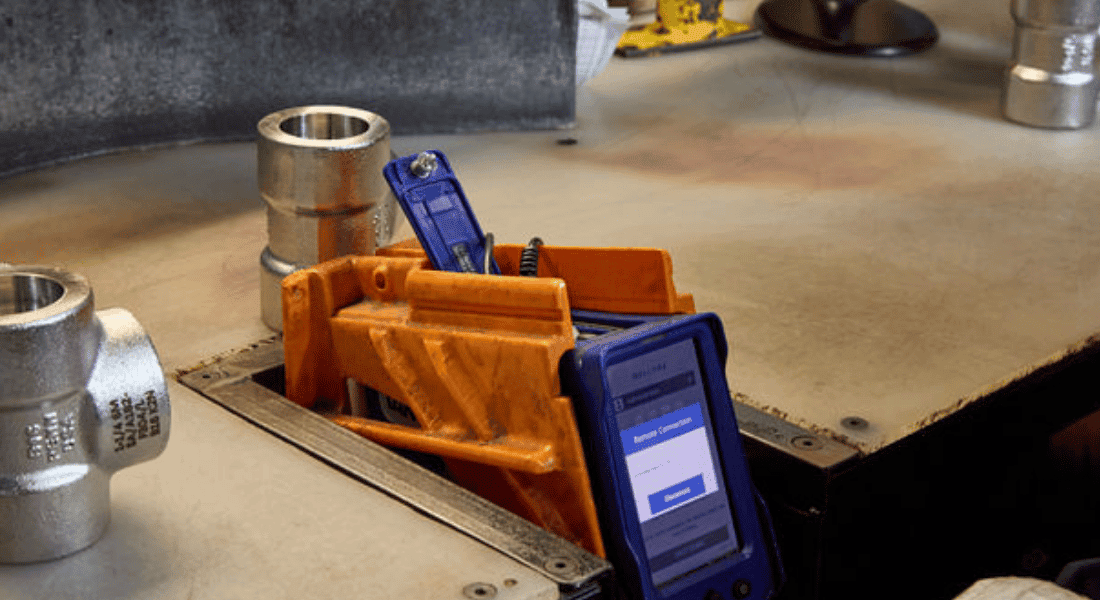
- Positive Material Identification (PMI): You can’t afford a material mix-up. With our MetalTrace® integration, you get the peace of mind that the alloy you ordered is exactly what arrives at the job site—full traceability, no guesswork.
- Corrosion and intergranular testing: ASTM A262/A923
This ensures every fitting is certified for pressure, temperature, and corrosion performance.
Applications Across Refinery Units
| Unit Type | Material Grades Typically Used | Primary Performance Requirement |
| Coker Units | F22, Alloy 800H | Resistance to thermal fatigue, carburization |
| Reformers | 321H, 347H, 800H | Creep strength, oxidation resistance |
| Hydrotreaters | 316L, Alloy 625 | Hydrogen attack and sulfidation defense |
| Alkylation Units | Alloy 20, Monel® 400 | Acid corrosion resistance |
| FCC Units | F11/F22, Incoloy® grades | High-temp creep resistance |
| Utilities | A105, 316L | Pressure and fatigue resistance |
Table 1: Each of these grades is selected not only for performance but for compatibility with adjacent materials and welding procedures, ensuring long-term system integrity.
Cost and Supply Chain Considerations
Refinery operators face the dual challenge of material reliability and inventory management. Through standardization around high-performance grades available in Penn Machine’s supply chain, customers benefit from:
- Reduced lead times on common alloy families
- Interchangeable fittings across units and pressure classes
- Consolidated SKUs for RFQs and long-term contracts
Penn Machine’s inventory strategy allows end-users to balance availability with performance, ensuring critical alloys like 316L, F22, or Alloy 625 are always ready for turnaround or expansion projects.
We know that stocking specialty alloys like Alloy 20 or Monel® 400 is a capital-heavy commitment for distributors. That’s why Penn Machine maintains a deep inventory of these grades. Think of us as your back-up warehouse—we help you say ‘yes’ to your customers’ emergency refinery needs without you having to carry the full inventory risk.
Sustainability and Lifecycle Thinking
Selecting the right alloy also supports sustainability goals. Longer service life means fewer replacements, reduced emissions from manufacturing, and less waste metal. Nickel-based alloys, for example, are highly recyclable into prime quality raw materials, while maintaining their chemical integrity after reprocessing.
Penn Machine’s forging operations further minimize environmental impact through:
- Recycled billet input
- Precision forging that reduces machining waste
- Energy-efficient heat treatment systems
Don’t Leave Your Material Integrity to Chance.
Refinery environments change, and so do your needs. Whether you’re planning a turnaround or facing an emergency replacement, our team is ready to help you select the exact grade for your application.
Need an MTR or a quote on a specialty alloy today? Give our responsive team a call.