
Our Products
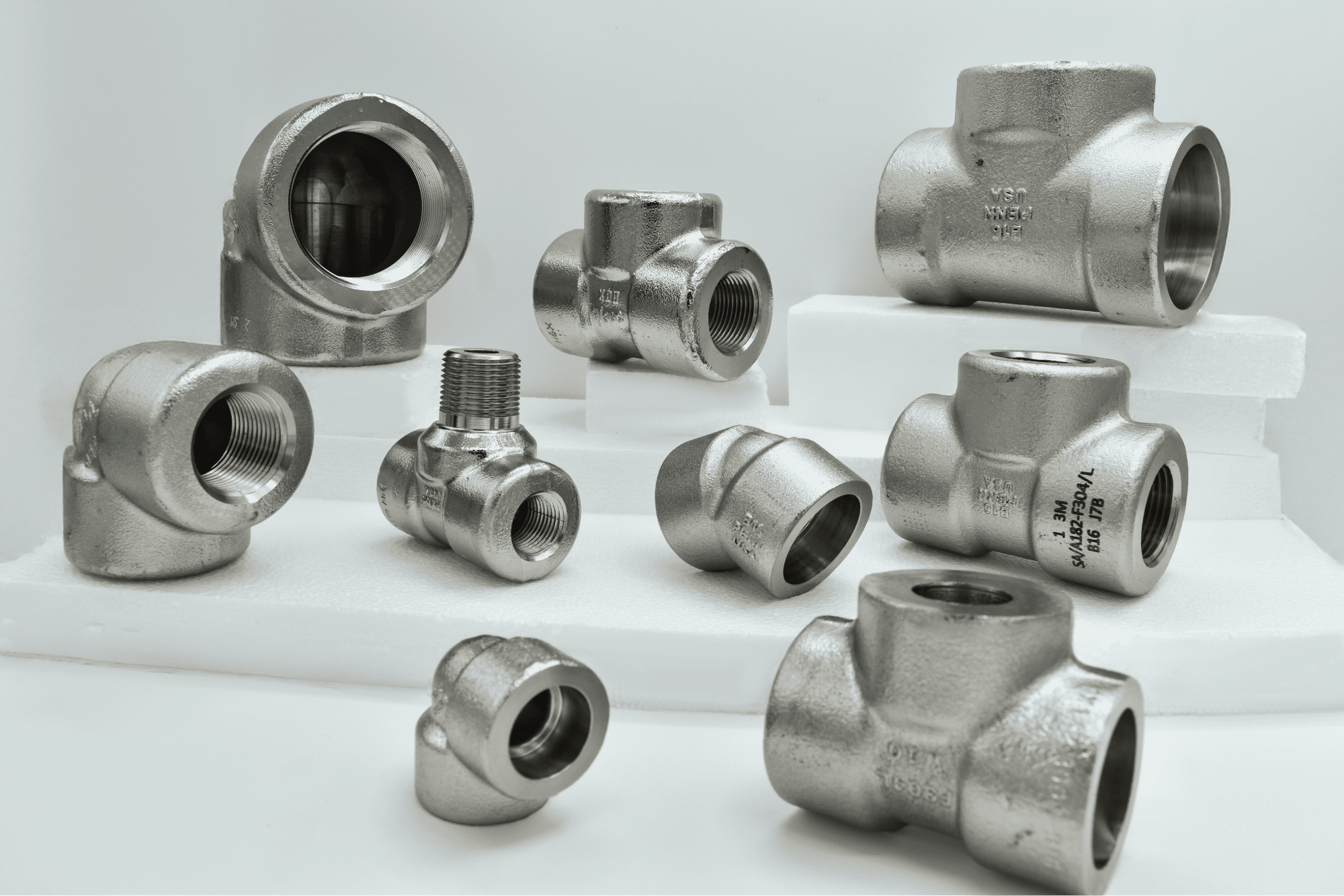
Forged Shape Fittings
Protect Your High-Pressure Piping Systems from Costly Failures and Lead-Time Delays
When your operations depend on high-pressure integrity, there’s no room for compromise. Get the strength, safety, and dependability of American-made forged fittings designed to withstand your most demanding environments. Every forged pipe fitting we produce is built to handle extreme mechanical stress, ensuring your workforce and infrastructure remain protected.
Through stocking distributors, we supply rugged, precision-machined connections built to handle extreme mechanical stress. Protect your workforce, secure your network, and eliminate lead-time anxiety with an American manufacturing team that answers the phone 24/7.
Overview of Forged Fittings
Your projects don’t have time for shipment delays or material failures. Whether you’re managing a petrochemical plant or a complex refinery turnaround, you need high-performance pipe fittings that meet exact specifications every time. Receive heavy-duty forged shape fittings for high-pressure, high-temperature, and highly corrosive applications, engineered by Penn Machine.
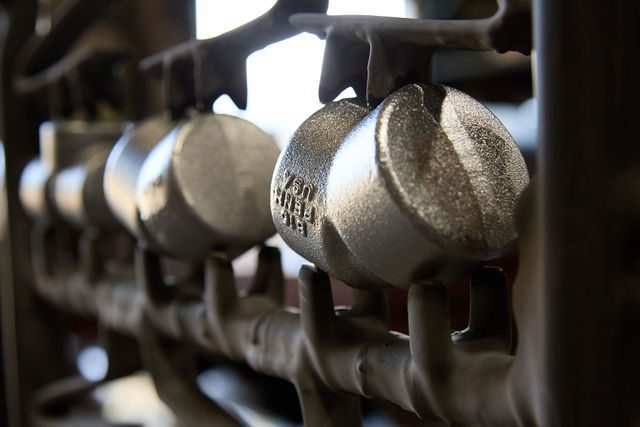
By leveraging our vertically integrated supply chain — with our master steel forging processes executed by our sister company, U.S. Drop Forge — we provide full oversight of the manufacturing process. This integration eliminates third-party delays, ensures exceptional metallurgy, and allows for faster turnarounds on custom orders for specialized steel pipe fittings.
Key Features of Forged Fittings
Here are some qualities that set Penn Machine forged steel pipe fittings apart:
- Forged from a full range of carbon, stainless, alloy steels, and non-ferrous metals.
- Available in industry and military standards as well as custom configurations.
- Designed for high-pressure, high-temperature, and corrosive environments.
- Full traceability with Material Test Reports (MTRs) provided.
- 24/7 rush delivery service for urgent project needs.
Product Specifications & Capabilities
We manufacture forged fittings to meet MSS standards and ASME B16.11 specifications, ensuring interchangeable reliability for your pipe connections.
Pressure Classes: 2000#, 3000#, 6000#, and 9000#.
Thread Types: NPT, NPTF, NPSC, NGT, BSPP, BSPT, and specialized threads.
Available Shapes:
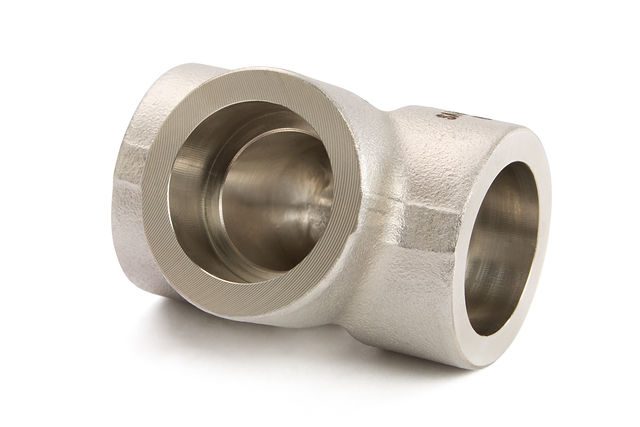
Elbows: 45°, 90°, and Street Elbows (Socket Weld & Threaded).
Tees: Standard, Cushion, and Butt Weld.
Branch & Directional: Crosses, Laterals and Leg 90° Elbows.

Compliance and Certifications
We remove the risk from your procurement process by maintaining the highest industry certifications. We hold our steel fittings to rigorous quality standards:
Global Standards: ISO 9001:2015 and the European Pressure Equipment Directive (PED) 2014/68/EU certifications.
Specialized Compliance: Certified AIS/BABA (Build America Buy America) and NSF-61 for public water treatment and utility applications.
Safety Excellence: As an OSHA SHARP-certified manufacturer with an excellent safety record, we prioritize the same safety standards in our plant that you demand in your field.
Critical Applications
Penn Machine forged steel fittings provide a secure, leak-proof pipe fitting solution across multiple demanding spaces. These include:
Marine and Shipbuilding: Heavy-duty marine piping systems requiring durable, seawater-resistant components.
OEM Assemblies: Custom-machined blocks and assemblies for critical industrial machinery.
Nuclear and Cryogenic: High-integrity containment systems operating under extreme thermal variations.
Petrochemical Plants: High-stress pressure piping handling corrosive chemicals and volatile gases.
Related Products
Peruse our broader catalog for a full line of products to complete your industrial piping system. Beyond standard shapes, our product range includes bar fittings, branch connections, swages, heavy-wall stainless steel flanges, and specialty marine hardware, all manufactured to the same exacting standards.
For applications requiring specialized utility layouts, ask our team about our sourcing capabilities for flare fittings, industrial hose fittings, brass pipe fittings, compression fittings, or heavy-duty bulkhead fittings. Explore our full inventory:
Request A Quote
Contact us today to discuss your project. Our engineering and sales teams are available to help with material specifications, cross-referencing part numbers, and reducing lead times by quickly providing you with a detailed, transparent quote for your order.
FAQs About Forged Fittings
Here are some frequently asked questions about forged fittings:
A forged fitting is a piping component machined from a solid piece of forged steel that has been heated and hammered into shape. This specialized manufacturing method eliminates internal voids and creates an incredibly strong, dense forged pipe fitting capable of handling extreme pressures.
While both are reliable, forged pipe fittings are typically machined from a solid, impact-formed block of metal and are utilized for high-pressure socket welds or threaded connections (ASME B16.11). Wrought fittings, such as a traditional buttweld fitting, are formed from seamless or welded steel pipe and are usually used for larger diameter, lower-pressure systems where the components are welded directly end-to-end.
The primary governing standard is ASME B16.11. This standard covers the dimensions, pressure-temperature ratings, tolerances, marking, and material requirements for both forged threaded and socket weld fittings.
Cast fittings are made by melting metal and pouring it into a mold, which can leave microscopic air pockets or imperfections. Forged steel is worked while solid, forcing the grain structure of the steel to align with the shape of the component, eliminating porosity.
Forged components offer a superior grain structure, resulting in significantly higher mechanical strength, better ductility, and superior resistance to fatigue and impact. For critical high-pressure systems, a forged component is the safer, more durable choice.
Our stainless steel pipe fitting and carbon steel products are widely trusted across the oil and gas sector, chemical processing plants, nuclear power generation facilities, municipal water systems, and heavy marine and naval shipbuilding industries.